Retaining Walls Wollongong & the Illawarra
Retaining walls built for Illawarra ground.
From tired timber sleepers and leaning walls to new retaining systems for sloping blocks, Escarpment Retaining Co handles retaining walls, excavation and drainage across Wollongong and surrounding Illawarra areas.
Concrete, timber and block systems
Excavation, drainage and site prep
Replacement of failed and leaning walls

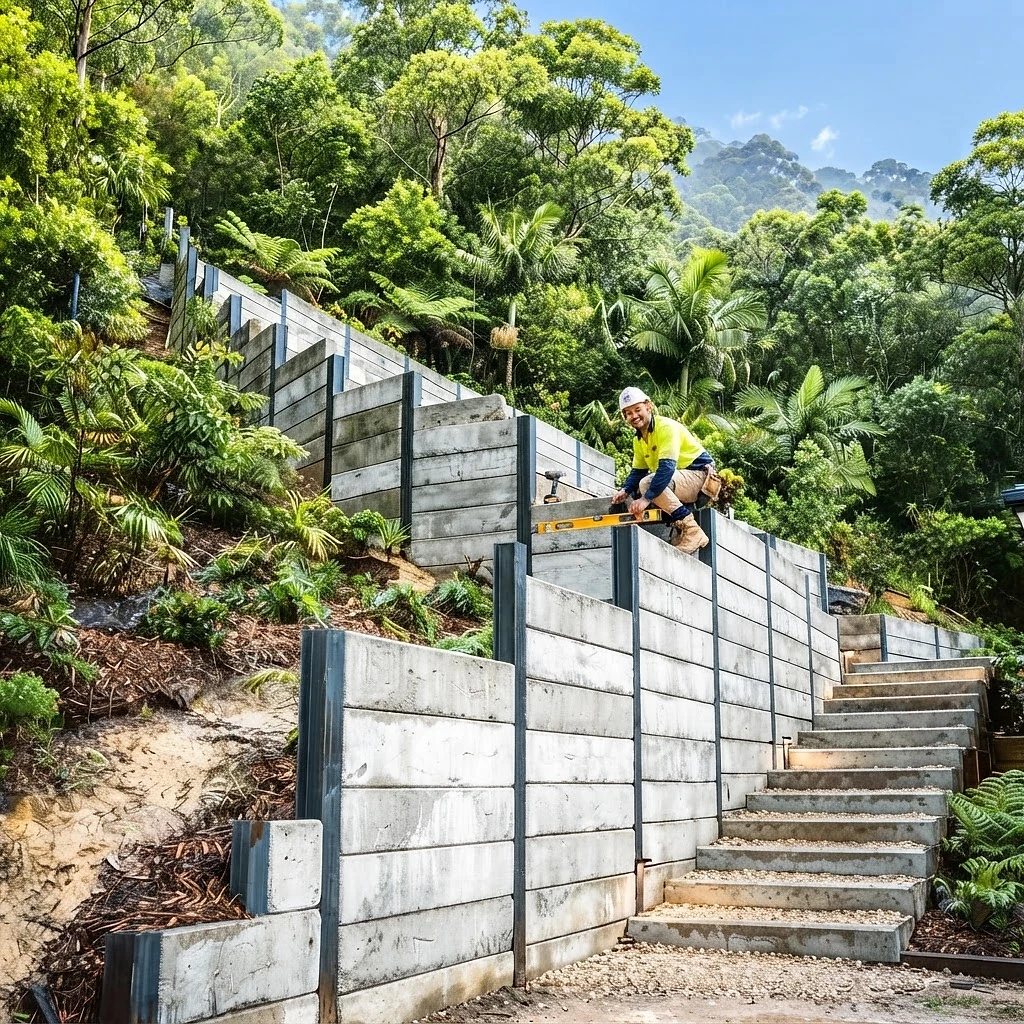
What we build
Retaining walls for sloping Wollongong blocks.
Why retaining walls fail
The visible wall is often only part of the problem.
Most retaining walls don't fail because the sleepers weren't strong enough. They fail because of what's happening behind them — drainage, footing depth, soil pressure and what the ground above the wall is doing. Pick a symptom below and we'll explain what usually sits behind it.
Leaning
The wall is being pushed. Usually pressure from wet soil the drainage isn't dealing with, or footings that were never deep enough for the load.


Wollongong's terrain matters
Built between the escarpment and the coast.
Wollongong isn't flat country. From the foothills beneath the Illawarra Escarpment through to established suburban blocks closer to the coast, changes in level are part of building here.
That means a retaining wall isn't simply decorative. It may be holding garden soil, driveway levels, cut ground, a boundary change, a raised yard or a sloping section of the block.
Proper design starts with understanding what the wall is actually retaining — and what the ground around it is doing. We'll work that out before recommending the wall.

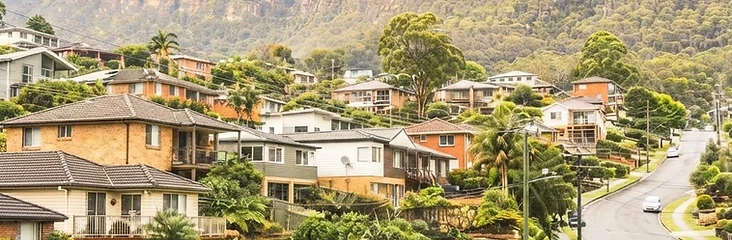
What we look at on site
- Slope across and along the site
- Access for machinery and materials
- Where water currently runs and pools
- Runoff from roofs, driveways and above
- Soil conditions and existing backfill
- Wall height and what sits above it
- Nearby structures, sheds and paths
- Boundaries and neighbouring levels
- Room to excavate and stockpile
Every block is different. We don't make assumptions about a site until we've seen it or seen decent photos of it.
Drainage
The water has to go somewhere.
Retaining walls hold back soil, but they also have to deal with water moving through that soil. Drainage behind the wall matters just as much as what you see from the front.
There's no single specification that suits every job. The right system depends on the wall, the height, the material behind it and where the water can actually be discharged.

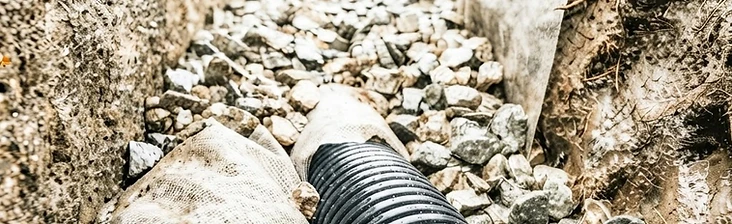
Drainage aggregate
Free-draining material behind the wall so water can move down rather than sit against it.
Ag pipe where appropriate
A collection line at the base of the drainage layer, laid to fall, wrapped or sleeved to suit the material around it.
Outlets
Drainage only works if the water has somewhere to go. Outlets need to discharge somewhere sensible, not just stop.
Surface water
Roof water, driveway runoff and overland flow above the wall often matter more than what's directly behind it.
Pressure behind walls
Saturated soil is far heavier than dry soil. That extra load is what pushes walls over.
Keeping paths clear
Silt, roots and blocked outlets undo good drainage over time. Worth checking, especially after a wet run.
Engineering & approvals
Some walls need engineering or approval.
We won't tell you that every wall under a certain height is automatically fine. Whether a retaining wall needs engineering design or council approval depends on the specific site, and retaining walls in Wollongong can be subject to development and engineering considerations depending on where and what they are.
We'll identify that early rather than pretending every wall is the same.
What the requirements depend on
- Wall height
- Location on the property
- Proximity to boundaries
- Surcharge or load above the wall
- Nearby structures and services
- Site conditions and slope
- The planning controls that apply
If a job looks like it needs a design from an engineer or an approval pathway, we'll say so upfront so it's part of the plan instead of a surprise halfway through.
Cost
How much does a retaining wall cost in Wollongong?
We don't publish a universal metre rate, because it wouldn't be true. Two walls the same length on two Wollongong blocks can be very different jobs once you factor in slope, access and what's behind the existing wall. Here's what actually moves the price.
Process
How a job usually runs.
Tell us what's happening
Call us or send the quote form with a short description of the wall and the site.
Send photos
The wall, the surrounding ground above and below it, and how we'd get machinery in.
Site inspection
Where required. Some jobs are clear from photos, others need a look in person.
Work out the right wall
Material, height, drainage and construction approach based on what the ground is doing.
Excavation & preparation
Remove failed material, excavate where needed and prepare footings properly.
Build, backfill & clean up
Build the wall, install drainage and backfill, then leave the site tidy.
Repair or replacement
Is your retaining wall starting to move?
If the wall is leaning, cracking or starting to move, it's worth finding out why. Sometimes a repair is genuinely the right call. Often the cause sits behind the wall, and patching the face just delays the same failure.
A leaning wall isn't fixed by making the front look straight again. The cause needs to be understood first.
Leaning posts
Sleepers separating
Horizontal bowing
Cracked blocks
Washed-out soil
Water sitting behind the wall
Rotten timber
Displaced caps
Erosion above or below
Movement after storms

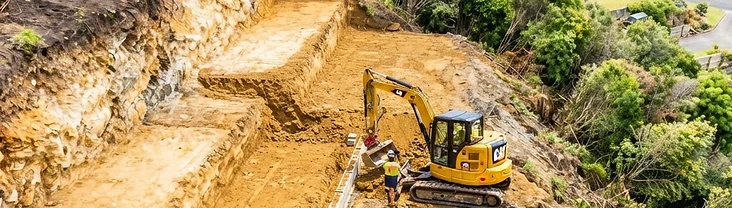
Service area
Wollongong and surrounding Illawarra areas.
We're based around Wollongong and work through the northern suburbs, the foothill areas beneath the escarpment and south through the Illawarra.
Send through a couple of photos and we'll get a better idea of the site.
Call us, or use the quote form. Photos of the wall, the ground behind it and the access tell us more than a description ever will.